
MidVision RapidDeploy
About
MidVision RapidDeploy automates application releases across middleware environments, with tools for deployment, orchestration and release management. Teams can maintain external resources such as files, folders, source control and artifact repositories, and define logical servers with connection details. Cloud-provider plugins cover AWS, Azure and VMware. Its orchestration designer supports task dependencies, conditionals, loops, scoped variables and failure branches. Job plans can combine parallel jobs, manual steps, triggers, schedules, notifications, approval gates, rollback pipelines and failure pipelines. MidVision lists 55 plugins and 34 ready-made blueprints for integrations across middleware, cloud platforms, source control, CI servers and databases. Examples include Git, Jenkins, Kubernetes, Docker, Slack, Maven and Nexus. The framework server is available for Linux, Windows and Mac OS/X 64-bit, as well as as a Docker image; remote connections use SSH or an agent. The free usage tier is limited to 10 nodes with community support. Community Support for up to 50 endpoints is listed at 50.00 USD per year per target endpoint.
Who it is for
RapidDeploy suits teams managing releases across established, heterogeneous middleware and technology environments. The free tier may fit deployments of up to 10 nodes that can use community support.
What is good
- Orchestration supports dependencies and failure branches.
- Job plans include approvals, schedules and rollbacks.
- Lists 55 plugins and 34 ready-made blueprints.
- Framework server is available as a Docker image.
What to know first
- Free usage is limited to 10 nodes.
- Community support has no SLA.
- IBM DataPower plugin requires a separate license.
Inferse review
MidVision RapidDeploy: the full review
RapidDeploy offers detailed orchestration and release planning across middleware environments, with a broad set of listed plugins. Confirm endpoint pricing and support level for the intended deployment; community support has no SLA.
Overview
MidVision RapidDeploy is an application release automation platform for coordinating deployments across middleware and connected infrastructure. It is best suited to mid-to-large teams managing heterogeneous estates. Its case is strongest when releases need substantial orchestration; endpoint-based pricing and support levels should shape the buying decision.
Key features
Resources and infrastructure
Teams can organize files, folders, source-control locations, and artifacts in a shared resource library. Logical server definitions hold hostnames or IP addresses and connection details, while cloud plugins cover AWS, Azure, and VMware. That combination helps teams coordinate deployment inputs and targets across varied environments rather than treating each release as a standalone script.
Orchestration and release controls
The designer handles ordered tasks, dependencies, conditionals, loops, scoped variables, and failure branches. Job plans can add parallel work, manual steps, triggers, schedules, notifications, approval gates, rollback pipelines, and failure pipelines. Multi-application releases, environment promotion, dependency tracking, and release audit trails make RapidDeploy a strong fit for controlled release processes. This breadth is valuable when workflows span teams and environments, but is harder to justify for a small team with simple deployment needs.
Integrations and deployment
MidVision describes 55 plugins and 34 ready-made blueprints spanning middleware, cloud, source control, CI servers, and databases. Examples include Git, Subversion, Jenkins, Kubernetes, Docker, Slack, Maven, Nexus, and IBM products. The framework server is distributed for Linux, Windows, and Mac OS/X 64-bit, or as a Docker image. Connections to remote servers use SSH or an agent; agents support Basic Auth or SSL in point-to-point or multicast modes. The IBM DataPower plugin requires a separate license.
Pricing
RapidDeploy has a free tier and paid endpoint-based plans. The free Community Support tier costs 0.00 USD per year, covers up to 10 endpoints, and includes basic online and community support. Its license is issued for an initial three-month or one-year period, and community support has no SLA, relying on a shared portal or forums. It is a sensible entry point for small evaluations, but the endpoint cap and support model limit its appeal for production teams that need a service commitment.
Paid prices are per target endpoint per year. Community Support costs 50.00 USD per year for up to 50 endpoints and for 51–250 endpoints. Standard Support costs 250.00 USD per year for up to 50 endpoints, 200.00 USD per year for 51–250 endpoints, and 100.00 USD per year for 251–1000 endpoints. For 1000+ endpoints, Standard Support is 50.00 USD per year, with unlimited endpoint pricing by discussion. Platinum Support costs 500.00 USD per year for up to 50 endpoints, 400.00 USD per year for 51–250 endpoints, and 200.00 USD per year for 251–1000 endpoints.
Standard and Platinum tiers are the choices for teams prioritizing stronger support over community-only assistance. Platinum includes 24/7 telephone support and a dedicated technician for severity 1 incidents until resolution. The 1000+ Standard tier warrants confirming the endpoint arrangement directly. Smaller deployments can face higher per-endpoint prices on Standard and Platinum than larger endpoint bands, so compare the appropriate band and support level rather than relying on the headline starting price.
Platforms
RapidDeploy supports API, Linux, macOS, self-hosted, web, and Windows environments. Its server downloads and Docker image, combined with SSH or agent connectivity, suit organizations that want deployment control within their own infrastructure.
Who it's for
RapidDeploy is aimed at organizations with established, mixed technology estates that need to improve release efficiency, pace, and reliability. It is particularly relevant when middleware deployments must be coordinated with cloud platforms, source control, CI systems, or databases. A small team automating a narrow, uncomplicated deployment is less likely to need its orchestration depth or endpoint-based support structure.
Pros and cons
Pros
- Detailed orchestration: dependencies, conditions, loops, parallel jobs, approval gates, and recovery pipelines support complex release flows.
- Broad integration coverage: 55 plugins and 34 blueprints span middleware and connected tools, with examples including AWS, Azure, Jenkins, Kubernetes, and Docker.
- Choice of connectivity and hosting: teams can run the framework server on Linux, Windows, or Mac OS/X, use Docker, and connect remotely through SSH or agents.
- Escalated incident support: Platinum includes round-the-clock telephone support and a dedicated technician for severity 1 incidents through resolution.
Cons
- Free tier is constrained: it stops at 10 endpoints and community support carries no SLA.
- Endpoint pricing needs careful comparison: paid rates vary by endpoint band and support level, and unlimited pricing for 1000+ endpoints is by discussion.
- One integration has an extra cost: IBM DataPower requires a separate license.
Alternatives
For teams considering other release and deployment tools, the Release Orchestration Software category provides a broader comparison.
Copado may suit teams wanting a free entry point with up to 15 deployments per month for one user; its free tier excludes shared deployments and team collaboration. Devtron Release Orchestration is an option for self-hosted teams whose free tier's limits of 50 vCPUs, 10 users, and one cluster fit their needs. Octopus Deploy is another freemium choice for teams comparing machine and tenant add-ons.
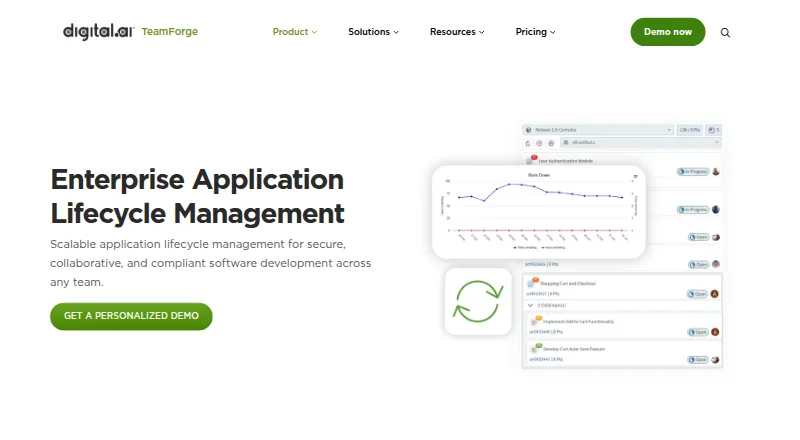
ARCAD DROPS is a paid alternative with a free trial. Digital.ai TeamForge is a paid alternative with custom pricing. Planview AdaptiveWork is a paid alternative with custom pricing. Enov8 Release Manager is a paid alternative with custom pricing. Gearset is a paid alternative with a free trial.
Verdict
Choose RapidDeploy if your organization needs detailed release orchestration across middleware and a heterogeneous estate, and its endpoint-based plans match your scale and support needs. Its depth and integration range are the main reasons to choose it; teams with simple workflows, or those unwilling to confirm endpoint costs and support terms, should compare alternatives first.
Compared on release orchestration software
- Free plan
- Yesmidvision.com
- Multi-application releases
- Yesmidvision.com
- Environment promotion
- Yesmidvision.com
- Approval gates
- Yesmidvision.com
- Dependency tracking
- Yesmidvision.com
- Release scheduling
- Yesmidvision.com
- Release audit trail
- Yesmidvision.com
- Deployment strategies
- bothmidvision.com
Facts
- Product purpose
- RapidDeploy is MidVision’s application release automation product for deploying, orchestrating, and managing releases across middleware environments.midvision.com · 29 Sept 2026
- Resource management
- It lets teams create a library of external resources, with plugins for local or remote files, folders, source control, and artifact repositories.midvision.com · 29 Sept 2026
- Infrastructure mapping
- RapidDeploy stores logical server definitions with IP addresses or hostnames and connection details, and supports cloud-provider plugins including AWS, Azure, and VMware.midvision.com · 29 Sept 2026
- Task orchestration
- Its orchestration designer supports task ordering and dependencies, conditionals, loops, scoped variables, and failure branches.midvision.com · 29 Sept 2026
- Pipelines and scheduling
- Job plans can include parallel jobs, manual steps, triggers, schedules, notifications, approval gates, rollback pipelines, and failure pipelines.midvision.com · 29 Sept 2026
- Integrations
- MidVision says RapidDeploy integrates with middleware, cloud platforms, source control, CI servers, and databases through 55 plugins, with 34 ready-made blueprints.midvision.com · 29 Sept 2026
- Plugin examples
- Listed integrations include AWS, Azure, VMware, Git, Subversion, Jenkins, Kubernetes, Docker, Slack, Maven, Nexus, and multiple IBM products.midvision.com · 29 Sept 2026
- Product distribution
- The RapidDeploy 5.2 framework server is available as Linux, Windows, and Mac OS/X 64-bit downloads and as a Docker image.midvision.com · 29 Sept 2026
- Remote connectivity
- RapidDeploy connects to remote servers using SSH or an agent, and the download page says agents support Basic Auth or SSL in point-to-point or multicast modes.midvision.com · 29 Sept 2026
- License limits
- The free usage tier is limited to 10 nodes with community support, and the IBM DataPower plugin requires a separate license.midvision.com · 29 Sept 2026
- Support
- Community support has no SLA and uses a shared portal or forums; Platinum includes 24/7 telephone support and a dedicated technician for severity 1 incidents until resolution.midvision.com · 29 Sept 2026
- Security and privacy
- MidVision’s privacy policy says browser traffic is encrypted with HTTPS, access to personal data is restricted, and the website does not use analytics or tracking.midvision.com · 29 Sept 2026
- Target customers
- MidVision says its customers are generally mid-to-large companies with established, heterogeneous technology infrastructure seeking to improve release efficiency, pace, and reliability.midvision.com · 29 Sept 2026
Company
- Founded
- 2008midvision.com · 28 Sept 2026
- Headquarters
- London, United Kingdommidvision.com · 28 Sept 2026
Best MidVision RapidDeploy alternatives
See all 12 7.3 Copado $8.25/mo first paid tier Free plan
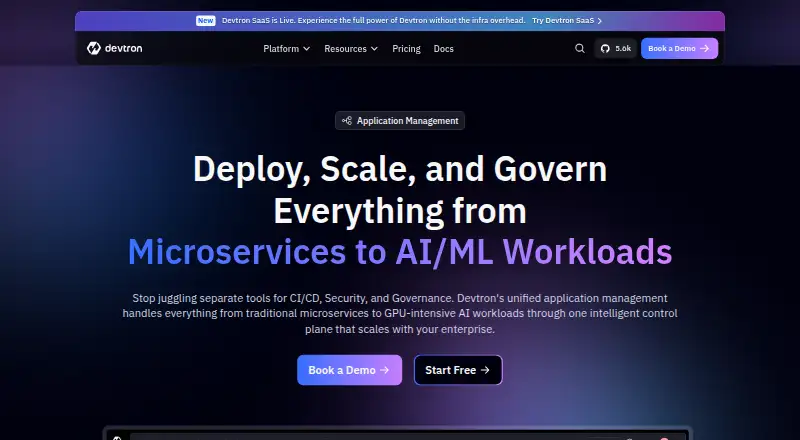 7.3 Devtron Release Orchestration $499/mo first paid tier Free plan
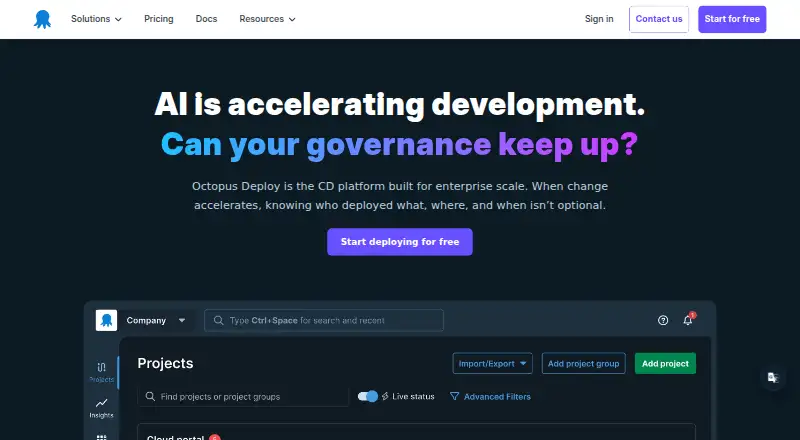 7.3 Octopus Deploy $64.17/mo first paid tier Free plan
 7.2 HCL Launch See plans price on the maker's page Free trial
  6.9 ARCAD DROPS See plans price on the maker's page Free trial
 6.9 Digital.ai TeamForge See plans price on the maker's page
 Where it ranks on Inferse
Sources
- midvision.com/rapiddeploy-overview/· checked 29 Sept 2026
- midvision.com/plugins/· checked 29 Sept 2026
- midvision.com/rapiddeploy-how-to-guides/download-rapi· checked 29 Sept 2026
- midvision.com/rapiddeploy-pricing/· checked 29 Sept 2026
- midvision.com/support-services/support-slas/· checked 29 Sept 2026
- midvision.com/privacy-policy/· checked 29 Sept 2026
- midvision.com/about-us/· checked 29 Sept 2026