
Patreon
About
Patreon lets creators build communities, share work, and earn through memberships or digital shops. Creators can offer monthly or annual subscriptions, tiers, one-time payments, and free work before introducing paid options. Supported formats include audio, images, rich text, video, livestreams, and email newsletters. Chats, direct messages, comments, and exportable email lists support audience engagement; analytics, free trials, discounts, and sales are among its listed growth tools. Podcast features include importing, syncing, multiple podcasts, Spotify, Synced Feeds, and RSS. Patreon offers mobile apps for iOS and Android, with listed integrations including Vimeo, Discord, ConvertKit, Discourse, Wix, and Zapier. It is free to start. Patreon charges 10% of income earned on the platform, with payment processing, currency conversion, payout fees, and applicable taxes potentially added. Patreon says its payment infrastructure handles chargebacks, disputes, fraud, and most applicable tax collection and remittance. Its public API v1 is scheduled to stop working on October 7, 2026, with integrations directed to API v2.
Who it is for
It suits podcasters, video creators, musicians, artists, and game developers who want to share work and earn from memberships or digital shops. Creators seeking multiple content formats, community tools, and podcast features may also find the platform relevant.
What is good
- Supports monthly and annual subscriptions.
- Creators can combine free work and paid options.
- Podcast tools include syncing, Spotify, and RSS.
- Handles chargebacks, disputes, fraud, and most applicable tax remittance.
What to know first
- Patreon charges 10% of income earned on the platform.
- Payment, currency conversion, payout fees, and taxes may apply.
- Public API v1 is scheduled to stop working October 7, 2026.
- Individual livestreams are limited to 12 hours.
Inferse review
Patreon: the full review
Patreon brings memberships, digital shops, community features, and several creator formats together. Account for its 10% platform fee and additional possible charges, and note the stated transition from public API v1 to v2.
Patreon gives creators a way to publish work and build paid relationships with their audience. It suits podcasters, video creators, musicians, artists, and game developers who want memberships alongside free content. Its breadth is useful, but the 10% platform fee and charges on top deserve close attention as earnings grow.
Overview
Patreon brings publishing, member communication, and payments into one service, with digital shops as another way to earn. Creators can start with free sharing and add paid options later, or combine open posts with paid tiers. That makes it a practical fit when audience access and recurring support belong in the same experience; it is less compelling for teams seeking a low-fee standalone subscription tool.
The platform dates to 2013 and is based in San Francisco. Its stated audience spans podcasters, video creators, musicians, artists, and game developers.
Key features
Memberships and publishing
Creators can offer monthly or annual subscriptions, membership tiers, one-time payments, and digital shops. Audio, images, rich-text posts, native video, and livestreaming cover several common creator formats without requiring separate publishing products for each. Free posts can introduce an audience to the work before paid access is added. Livestream sessions have a 12-hour continuous-broadcast ceiling, sufficient for typical events but not unusually long streams.
Free trials, discounts, and sales give creators ways to promote paid offers. Member analytics, insights, automated growth tools, and creator-first discovery support audience development, though the available features do not remove the work of building an audience.
Community and podcasts
Chats, direct messages, comments, newsletters, and exportable email lists provide several routes to maintain contact with members. Creators can set up to 10 chat spaces and decide whether access goes to all members, paid members, or selected tiers. Podcast tools include importing and syncing, multiple podcasts, Spotify, Synced Feeds, and RSS, a useful combination for creators managing more than one show.
Payments, integrations, and security
Supported payment methods include PayPal, Apple Pay, Venmo, and Sofort, and Patreon supports at least 16 currencies for payouts and pay-ins. Patreon says it handles chargebacks, disputes, and fraud, and manages most applicable tax collection and remittance. Payment processing, currency conversion, payout fees, and applicable taxes may still add costs.
The app directory includes Vimeo, Discord, ConvertKit, Discourse, Wix, and Zapier. Patreon says it uses TLS for sensitive information, HTTPS for traffic, two-factor authentication, and CAPTCHA checks for suspicious activity; it also runs a bug bounty programme and accepts security reports by email. These controls and payment operations reduce some operational burden, but do not change the platform fee.
Patreon supports Android, iOS, web, and API use, and offers a mobile app. Creators with existing integrations should account for the transition from public API v1, scheduled to stop working on October 7, 2026, to API v2.
Pricing
Patreon is free to start: its free plan costs 0.00 USD per free, and creators pay when they earn. The standard pricing is billed at 10% of income earned on Patreon, plus payment processing, currency conversion, payout fees, and applicable taxes. There is also a plan entry priced at 10.00 USD per month that describes the platform fee as 10% of income plus applicable fees and taxes; creators should distinguish that stated percentage charge from a fixed subscription price.
The Standard plan has no published price and includes up to 100 hours per month of video hosting if the creator has paying fans. That allowance may suit creators whose paid offering relies on video, while the stated condition ties it to having paying fans. The free-to-start option includes monthly and annual subscriptions, membership tiers, and one-time payments. No free-tier caps are stated, so the practical cost question is the percentage of earnings and additional charges, rather than a stated usage quota.
Platforms
Patreon runs on web, Android, and iOS, and offers API access. Custom domains are supported, as are post-level content gating and both subscription billing frequencies. The public API v1 transition matters for builders with integrations: plan for API v2 rather than relying on v1 beyond its scheduled end date.
Who it's for
Patreon is best suited to creators who want to combine publishing and community with recurring memberships, occasional one-time sales, or a digital shop. It is particularly relevant to podcast and video creators because of its dedicated podcast tools and native video. Teams that prioritize predictable low transaction costs, or want a service centered on a different membership or video-hosting model, should compare alternatives before committing.
Pros and cons
- Pros: Multiple billing and payment formats let creators mix memberships, tiers, one-time payments, and shops rather than forcing a single revenue model.
- Pros: Broad media support, podcast tools, and tier-controlled chat spaces put publishing and member engagement in one product.
- Pros: Patreon takes on chargebacks, disputes, fraud, and most applicable tax collection and remittance, reducing some payment administration.
- Cons: The 10% platform fee is charged on income, with processing, conversion, payout, and tax costs potentially added.
- Cons: Creators relying on public API v1 need to plan for its scheduled shutdown on October 7, 2026.
- Cons: Livestreams cannot run continuously beyond 12 hours, and chat spaces are capped at 10.
Alternatives
For a broader membership-platform shortlist, compare Membership Site Platforms; podcast-focused options are gathered in Podcast Monetization Platforms.
Systeme.io is worth considering when a free web and API plan with explicit contact, funnel, course, blog, and custom-domain caps better fits a compact business setup. Uscreen may suit teams seeking a paid video platform with a free trial and a stated Starter allowance of 100 subscribers and 20 video-storage hours. Vimeo is an option when video storage is the priority, with a free tier of 1 seat and 1 GB storage and a Starter plan at 12.00 USD per month.
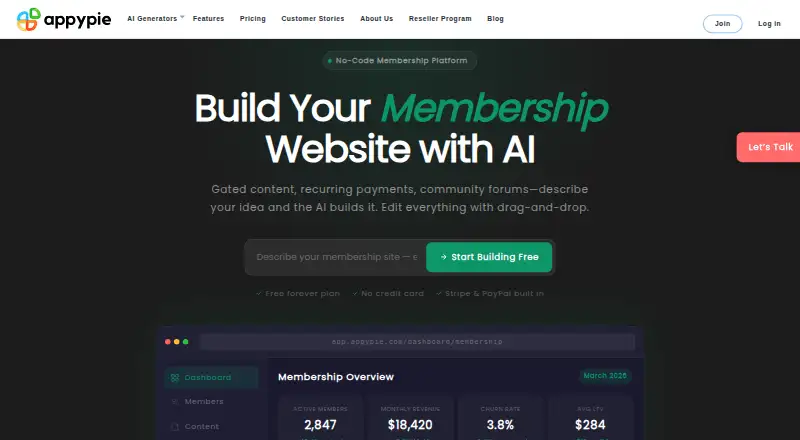
Appy Pie Membership Website Builder is another freemium membership-site option. Paid Memberships Pro may fit teams that prefer a self-hosted, open-source core plugin and add-ons under GPLv2. Fourthwall is another freemium option for creators considering shops and memberships. Raklet offers a free plan with 100 contacts, one admin seat, and 1,250 free emails per month, useful when those caps fit. Muvi One is a paid option with a free trial for teams comparing dedicated video platform plans.
Verdict
Choose Patreon if you want one creator-facing service for memberships, publishing, community, and several ways to earn, especially for a podcast or a mix of media. Its breadth and payment administration are the main reasons to choose it. Look elsewhere if the 10% income fee plus possible additional charges outweigh the convenience, or if your integration depends on public API v1 after its scheduled retirement.
Compared on membership site platforms
- Free plan
- Yespatreon.com
- Paid from
- Freepatreon.com
- Custom domain
- Yespatreon.com
- Content gating
- postpatreon.com
- Subscription billing
- bothpatreon.com
- Transaction fee
- 10% platform fee for new creators, plus payment processing, currency conversion, payout fees, and applicable taxespatreon.com
Facts
- Platform fee
- Patreon charges 10% of income earned on Patreon.patreon.com · 27 Sept 2026
- Additional fees
- Payment processing, currency conversion, payout fees, and applicable taxes may apply.patreon.com · 27 Sept 2026
- Billing options
- Creators can offer monthly and annual subscriptions.patreon.com · 27 Sept 2026
- Free tier
- Creators can share work for free and introduce paid options later.patreon.com · 27 Sept 2026
- Free tier limits
- No free-tier limits are stated on the provided page text.patreon.com · 27 Sept 2026
- Payment features
- Patreon supports memberships, one-time payments, tiers, and shops.patreon.com · 27 Sept 2026
- Community tools
- Chats, direct messages, comments, and email newsletters are available.patreon.com · 27 Sept 2026
- Content formats
- Creators can use audio, images, rich text, video, and livestreaming.patreon.com · 27 Sept 2026
- Free trials
- Free trials, discounts, and sales are available growth tools.patreon.com · 27 Sept 2026
- Mobile access
- Patreon provides a mobile app.patreon.com · 27 Sept 2026
- Podcast support
- Podcast tools include importing, syncing, multiple podcasts, Spotify, Synced Feeds, and RSS.patreon.com · 27 Sept 2026
- Payment methods
- Supported methods include PayPal, Apple Pay, Venmo, and Sofort.patreon.com · 27 Sept 2026
- Security compliance
- Patreon says it meets top global standards for safety and compliance.patreon.com · 27 Sept 2026
- Payment risk
- Patreon handles chargebacks, disputes, and fraud.patreon.com · 27 Sept 2026
- Tax handling
- Patreon manages most applicable tax collection and remittance.patreon.com · 27 Sept 2026
- Currency support
- Patreon supports 16 or more currencies for payouts and pay-ins.patreon.com · 27 Sept 2026
- Company location
- Patreon lists an address at 600 Townsend Street, Suite 500, San Francisco, California.patreon.com · 27 Sept 2026
- What it does
- Patreon lets creators build communities, share exclusive work, and earn through paid memberships or digital shops.patreon.com · 28 Sept 2026
- Creator tools
- The platform supports audio, images, rich-text editing, native video, livestreaming, and email newsletters.patreon.com · 28 Sept 2026
- Community features
- Creators can use chats, direct messages, comments, and exportable email lists to engage fans.patreon.com · 28 Sept 2026
- Growth tools
- Patreon lists automated growth tools, member analytics and insights, free trials, discounts, sales, and creator-first discovery.patreon.com · 28 Sept 2026
- Integrations
- The app directory lists integrations and partners including Vimeo, Discord, ConvertKit, Discourse, Wix, and Zapier.patreon.com · 28 Sept 2026
- Mobile apps
- The Patreon app is available on iOS and Android.patreon.com · 28 Sept 2026
- Payments
- Patreon says its payments infrastructure handles chargebacks, disputes, fraud, and most applicable tax collection and remittance.patreon.com · 28 Sept 2026
- Security controls
- Patreon says it uses TLS for sensitive information, HTTPS for traffic, two-factor authentication, and CAPTCHA checks for suspicious activity.patreon.com · 28 Sept 2026
- Security reporting
- Patreon offers a bug bounty programme and accepts security reports at [email protected].patreon.com · 28 Sept 2026
- API
- Patreon’s public API v1 is scheduled to stop working on October 7, 2026, with integrations directed to API v2.docs.patreon.com · 28 Sept 2026
- Livestream limit
- Individual Patreon livestream sessions are limited to 12 hours of continuous broadcasting.support.patreon.com · 28 Sept 2026
- Chat limit
- Creators can create up to 10 chat spaces, with access granted to all members, paid members, or selected tiers.support.patreon.com · 28 Sept 2026
- Audience
- Patreon’s stated creator categories include podcasters, video creators, musicians, artists, and game developers.patreon.com · 28 Sept 2026
Company
- Founded
- 2013patreon.com · 28 Sept 2026
- Headquarters
- San Francisco, California, USApatreon.com · 28 Sept 2026
Best Patreon alternatives
See all 12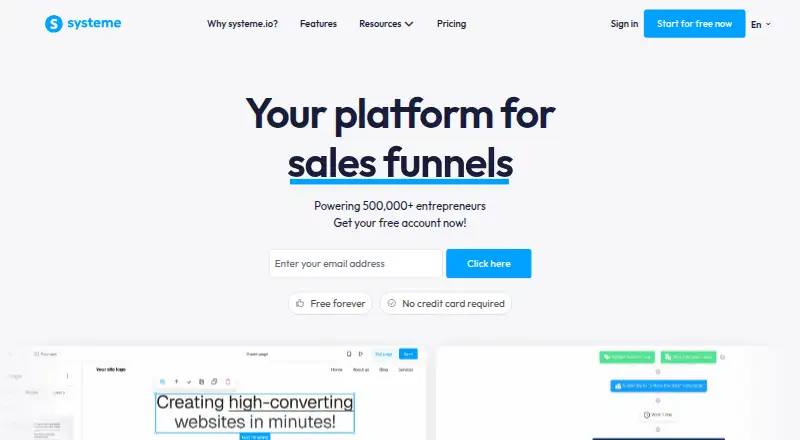 8.7 Systeme.io $17/mo first paid tier Free plan
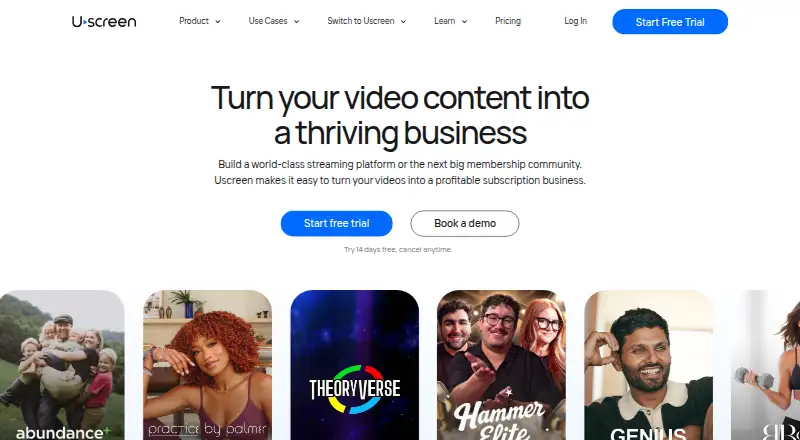 8.0 Uscreen $49/mo first paid tier Free trial
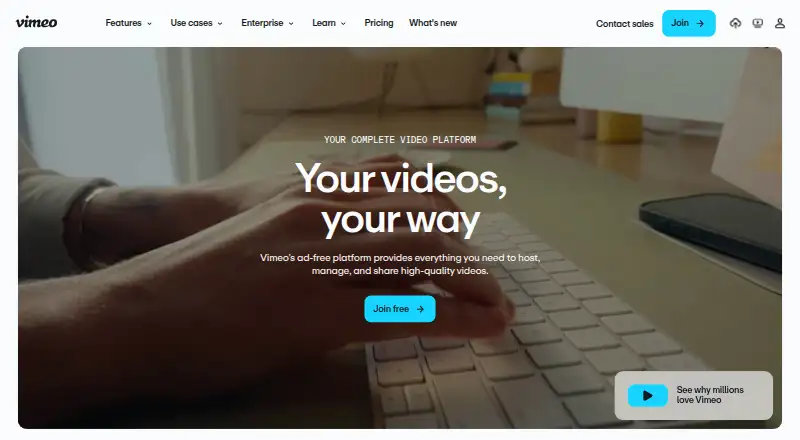 8.0 Vimeo $12/mo first paid tier Free plan
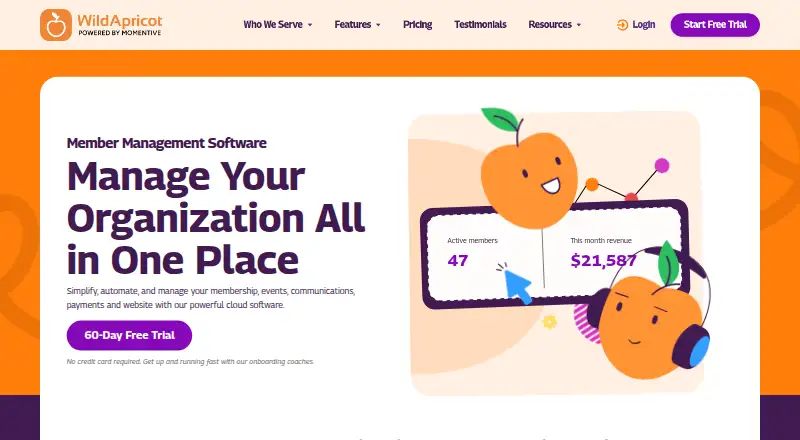 7.9 WildApricot $4.67/mo first paid tier Free trial
 7.4 Appy Pie Membership Website Builder $18/mo first paid tier Free plan
 7.4 Paid Memberships Pro $41.58/mo first paid tier Free plan
Where it ranks on Inferse
Sources
- patreon.com/pricing· checked 27 Sept 2026
- patreon.com· checked 27 Sept 2026
- patreon.com/about· checked 28 Sept 2026
- patreon.com/apps· checked 28 Sept 2026
- patreon.com/mobile· checked 28 Sept 2026
- patreon.com/policy/security· checked 28 Sept 2026
- docs.patreon.com· checked 28 Sept 2026
- support.patreon.com/hc/en-gb/articles/29638941178893-Live-s· checked 28 Sept 2026
- support.patreon.com/hc/en-us/articles/18855652505357-Buildi· checked 28 Sept 2026