
Qdrant
About
Qdrant is a vector similarity search engine for storing, searching and managing vectors alongside JSON payload metadata. That metadata can filter results, while dense, sparse and multivector configurations support different vector setups. Qdrant supports hybrid retrieval that combines semantic and lexical search, with use cases including semantic search and recommendation systems. It can run locally from a Docker image or through Qdrant Cloud, and provides REST and gRPC APIs plus official clients for Python, JavaScript/TypeScript, Rust, Go, .NET and Java. Listed integrations include LangChain, LlamaIndex, Airbyte, Unstructured, DocArray and AutoGen. The free cloud tier is intended for testing and prototypes, with a single-node cluster limited to 1GB RAM and 4GB disk. Qdrant Cloud has TLS and encryption at rest enabled; self-hosted deployments require customer configuration for these controls, and open-source self-hosted deployments do not enable authentication or encryption by default. The maker is headquartered in Berlin and was founded in 2021.
Who it is for
Qdrant suits teams building vector search or recommendation systems that need metadata filtering, hybrid retrieval or multiple vector configurations. Teams can choose local Docker deployment, Qdrant Cloud or customer-managed deployment options.
What is good
- Combines semantic and lexical retrieval.
- Filters search results with JSON payload metadata.
- Supports dense, sparse and multivector configurations.
- Official clients span six listed languages.
- Free cloud tier is available.
What to know first
- Free cloud tier is limited to one node.
- Free cloud tier has 1GB RAM and 4GB disk.
- Self-hosted security controls require customer configuration.
- Community support is Discord-only.
Inferse review
Qdrant: the full review
Qdrant offers a broad set of vector search capabilities, APIs and language clients, with local and cloud deployment paths. The free cloud tier is sized for testing and prototypes; teams self-hosting need to configure security controls themselves.
Overview
Qdrant is a vector similarity search engine for storing, searching, and managing vectors alongside additional payload data. Its API makes the vector store accessible to applications, while JSON metadata on each point can help narrow search results with filters. Qdrant describes semantic search and recommendation systems as use cases for vector databases.
The product supports dense, sparse, and multivector configurations, as well as hybrid retrieval that combines semantic and lexical search. It can run locally from a Docker image or through Qdrant Cloud. Qdrant is made by Qdrant, founded in 2021 and headquartered in Berlin, Germany.
For teams comparing where a vector database fits in a broader stack, see Vector database hosting, Search Databases, and Database Software.
Key features
Vectors, payloads, and retrieval
Qdrant points pair vectors with JSON payload metadata. That structure supports metadata-based filtering of results, and the product offers dense, sparse, and multivector options. Its index types include HNSW, sparse vector index, payload index, and filterable HNSW. The maximum supported vector size is 65,535 dimensions.
Hybrid retrieval combines semantic and lexical search, useful when an application needs both vector similarity and keyword-oriented signals. Qdrant also identifies semantic search and recommendation as relevant vector database applications.
APIs, clients, and integrations
REST and gRPC APIs provide access to Qdrant. Official client libraries are available for Python, JavaScript/TypeScript, Rust, Go, .NET, and Java. Listed integrations include LangChain, LlamaIndex, Airbyte, Unstructured, DocArray, and AutoGen.
Security and deployment choices
Qdrant can be self-hosted or run through Qdrant Cloud. Cloud includes built-in TLS and encryption at rest, and its security features are enabled by default. Self-hosted open-source deployments do not enable authentication or encryption by default, so operators need to configure those controls themselves.
Qdrant says documentation on SOC 2 Type 2 and HIPAA compliance is available through its Trust Center. The cloud offering also includes Hybrid Cloud, which runs on customer infrastructure and is managed through Qdrant Cloud, and Private Cloud, described as a dedicated isolated deployment with custom SLAs and air-gapped deployment support.
Pricing
Qdrant uses a freemium model. The Free Tier costs 0.00 USD per free (billed Free forever). It includes a single-node cluster with 0.5 vCPU, 1GB RAM, and 4GB disk, plus free cloud inference with selected models. Qdrant positions this tier for testing and prototypes; the resource limits make it a constrained starting point rather than a stated production configuration.
Standard Tier and Premium Tier prices are not listed. Standard Tier has a 99.5% uptime SLA, while Premium Tier has a 99.9% uptime SLA. Hybrid Cloud and Private Cloud also have no listed prices. Paid support options are described as either 10 hours per day during business hours or 24/7 coverage; community support is Discord-only.
Platforms
Qdrant is listed for API, Linux, macOS, Windows, web, and self-hosted use. Local deployment is available through a Docker image, while Qdrant Cloud offers a managed cloud option. Hybrid Cloud provides a managed control plane while keeping data in the customer's network.
Who it's for
Qdrant is relevant to teams building applications that need vector similarity search with metadata filtering, including semantic search and recommendation systems. Its REST and gRPC APIs, range of official clients, and integrations may suit stacks that already use those languages and frameworks. Dense, sparse, and multivector support plus hybrid retrieval offer several retrieval configurations within the same product.
Teams weighing deployment responsibility should distinguish self-hosted operation from Qdrant Cloud: self-hosted deployments require customer setup for authentication and encryption, while Cloud enables security features by default. The free cloud tier can support small tests and prototypes, but its single node, 1GB RAM, and 4GB disk limits matter when estimating whether it can meet an application's needs.
Pros and cons
- Pros: Dense, sparse, and multivector configurations; hybrid semantic and lexical retrieval; payload filtering; REST and gRPC APIs; and official clients across six language families.
- Pros: Local Docker deployment, cloud deployment, and options for customer-infrastructure or isolated deployments.
- Cons: The free cloud tier is limited to a single node with 1GB RAM and 4GB disk.
- Cons: Self-hosted open-source deployments do not enable authentication or encryption by default, so teams must configure these controls.
- Cons: Standard, Premium, Hybrid Cloud, and Private Cloud prices are not listed here.
Alternatives
Other products to compare include Chroma, Weaviate, Pinecone, Zilliz Cloud, Upstash Vector, and Cloudflare Vectorize. For broader database comparisons, see Embedded Databases.
Verdict
Qdrant presents a flexible vector search option for builders who want to choose between local, self-hosted, and managed-cloud deployment. Its combination of payload filtering, several vector configurations, hybrid retrieval, and broad client support gives teams multiple ways to fit it into an application stack. The main trade-offs are operational: self-hosted security needs deliberate configuration, the free cloud tier is modestly sized, and several paid-plan prices are not listed. Those constraints are worth resolving against workload and deployment requirements before choosing a tier.
Compared on database software
- Free plan
- Yesqdrant.tech
Facts
- Free plan
- Yesqdrant.tech · 22 Sept 2026
- Product
- Qdrant is a vector similarity search engine with an API to store, search, and manage vectors with additional payload data.qdrant.tech · 2 Oct 2026
- Search use cases
- Qdrant describes vector databases as useful for semantic search and recommendation systems.qdrant.tech · 2 Oct 2026
- Data and filtering
- Qdrant points can contain vectors and JSON payload metadata, which can be used to filter search results.qdrant.tech · 2 Oct 2026
- Vector support
- Qdrant supports dense, sparse, and multivector configurations.qdrant.tech · 2 Oct 2026
- Hybrid retrieval
- Qdrant supports hybrid retrieval combining semantic and lexical search.qdrant.tech · 2 Oct 2026
- Deployment
- Qdrant can be run locally using its Docker image or used through Qdrant Cloud.qdrant.tech · 2 Oct 2026
- APIs and clients
- Qdrant provides REST and gRPC APIs and official client libraries for Python, JavaScript/TypeScript, Rust, Go, .NET, and Java.qdrant.tech · 2 Oct 2026
- Integrations
- Qdrant lists integrations including LangChain, LlamaIndex, Airbyte, Unstructured, DocArray, and AutoGen.qdrant.tech · 2 Oct 2026
- Cloud security
- Qdrant Cloud includes built-in TLS and encryption at rest, while self-hosted deployments require customer configuration for these controls.qdrant.tech · 2 Oct 2026
- Security configuration
- Self-hosted open-source deployments do not enable authentication or encryption by default, while Qdrant Cloud enables security features by default.qdrant.tech · 2 Oct 2026
- Compliance
- Qdrant says its compliance documentation for SOC 2 Type 2 and HIPAA is available through its Trust Center.qdrant.tech · 2 Oct 2026
- Support
- The pricing page lists community support as Discord-only and paid support options with 10h/day business-hours or 24/7 coverage.qdrant.tech · 2 Oct 2026
- Free-tier limit
- The free cloud tier is intended for testing and prototypes and is limited to a single-node cluster with 1GB RAM and 4GB disk.qdrant.tech · 2 Oct 2026
Company
- Founded
- 2021qdrant.tech · 23 Sept 2026
- Headquarters
- Berlin, Germanyqdrant.tech · 23 Sept 2026
Best Qdrant alternatives
See all 12 9.0 MySQL See plans price on the maker's page Free plan
 8.5 Amazon RDS Free free plan, no paid price published Free plan
 8.5 SQLite $12.50/mo first paid tier Free plan
 8.4 Amazon DynamoDB Free free plan, no paid price published Free plan
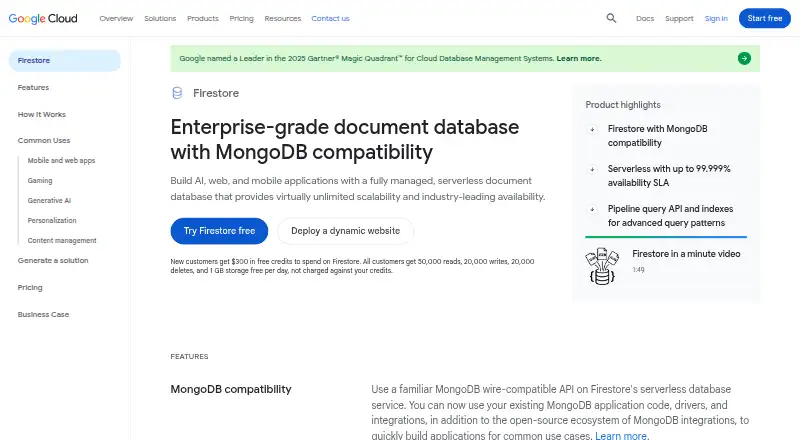 8.4 Firestore Free free plan, no paid price published Free plan
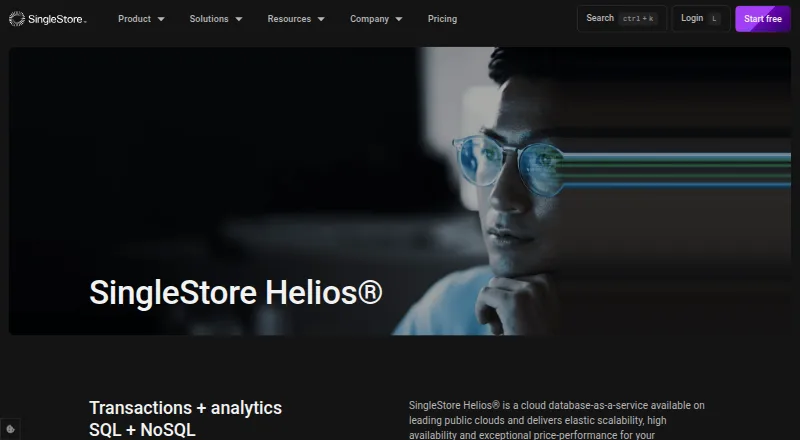 8.3 SingleStore Helios $0.99/mo first paid tier Free plan
 Where it ranks on Inferse
- Best Database Software in 2026#36 of 74
- Best Vector Database Hosting in 2026#2 of 38
- Best Embedded Databases in 2026#3 of 31
- Best Search Databases in 2026#3 of 29
Sources
- qdrant.tech/pricing/· checked 22 Sept 2026
- qdrant.tech/documentation/overview/what-is-qdrant/· checked 2 Oct 2026
- qdrant.tech/documentation/manage-data/· checked 2 Oct 2026
- qdrant.tech/documentation/overview/· checked 2 Oct 2026
- qdrant.tech/documentation/quickstart/· checked 2 Oct 2026
- qdrant.tech/partners/· checked 2 Oct 2026
- qdrant.tech/security/· checked 2 Oct 2026
- qdrant.tech/documentation/security/· checked 2 Oct 2026
- qdrant.tech· checked 23 Sept 2026