PC Slower Than It Used to Be?
A free scan shows the junk files, broken settings and background clutter dragging Windows down - then fixes them in one click.Free scan · Windows 10 & 11Outdated Drivers Are Slowing You Down
One free scan finds every outdated or missing driver and matches the right update for your exact hardware.Free scan · exact hardware matchInferse is reader-supported. When you buy through links on our site, we may earn an affiliate commission. As an Amazon Associate I earn from qualifying purchases. Learn more
Error tracking tools for web apps range from free plans with tight event, retention, or seat limits to paid plans starting at $26 to $29 per month among the publicly priced options compared here. The cheapest-looking plan is not always the lowest-cost choice: occurrences, events, sessions, traces, replays, logs, retention, seats, overages, and bundled uptime features can change the bill. For US readers, the prices below are the vendors’ published prices checked in November 2026, and the products are listed alphabetically, not ranked.
At a glance
| Name | Best for | Key spec | Free plan / price | Checked |
|---|---|---|---|---|
| BugSnag | Solo developers and passion projects that need broad platform coverage | 50+ platforms; event and performance-span choices affect usage | $0/month Free plan | November 2026 |
| GlitchTip | Small projects that want simple event pricing or self-hosting | 1,000 hosted events/month; 30-day retention | Free Hobby & Trial tier; hosted and self-hosted options | November 2026 |
| Honeybadger | Small teams that want error tracking bundled with operational monitoring | Team includes 50K errors/month, 100 MB/day ingest, five uptime monitors, and one status page | Free Developer plan; Team $26/month; Business $80/month | November 2026 |
| Rollbar | Teams comparing occurrence and session quotas with release-focused triage | Free plan includes 5,000 occurrences and 1,000 sessions | Free plan $0/month; paid pricing varies by plan and usage | November 2026 |
| Sentry | Solo developers through teams that need integrations and event-based monitoring | Pricing spans errors, traces, replays, and logs; Team includes unlimited users | Developer free; Team $29/month monthly or $26/month annually | November 2026 |
What is the typical cost of error tracking for a web app?
A small web app can start at $0 per month, but a useful paid setup commonly begins when the team needs shared access, longer retention, more event capacity, or integrations. In this comparison, the clearly published paid starting prices are Honeybadger Team at $26 per month and Sentry Team at $29 per month when billed monthly, or $26 per month with annual billing. Other products publish free tiers and feature or usage boundaries without a comparable paid starting price in the pricing information available here.
General shopping ads
That does not make the free plans interchangeable. Rollbar measures its free allowance in occurrences and sessions, GlitchTip uses events, Honeybadger combines errors with ingest and uptime allowances, and Sentry describes its model as event-based across errors, traces, replays, and logs. BugSnag’s pricing page also requires attention to event and performance-span choices. Compare the units your application will send before comparing the dollar figures.
Recommended Free Tools
1. BugSnag: who it is for
BugSnag suits solo developers and small projects that need error monitoring across many application environments and want to begin without a monthly charge. Its pricing page says the service supports more than 50 platforms across mobile, web, desktop, and server applications, which is useful when one organization maintains more than a browser frontend.
Shopping ad
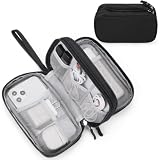
- Dimensions: 7.5" x 4.3" x 2.2". Compact size and lightweight make it easy to carry and put into your backpack, handbags or laptop bag without taking much space. Suitable for family use and daily organization. Note: Small mesh pockets are ideal for charging cords no longer than 3ft; longer cables (over 3ft) fit better in the larger compartments
- Quality Material: This electronic organizer travel case made of high quality durable waterproof oxford and soft sponge inside to secure your gadgets in place and deliver a quick access whenever you want. Water-resistant fabric protects your gear from unexpected splashes, keeping all your electronic essentials safe and secure
- Double Layers Design: This tech pouch features a double-layer interior design with 8 compartments, including multiple see-through mesh pockets and ample space to store your cords, cables, USB drives, cellphone, charger, mouse, flash drive and more, keeping all accessories neatly organized and tangle-free
- Practical and Convenient: Comes with a comfortable hand strap for easy carrying; You may carry it in your hand when heading out. Durable and smooth zipper closure keeps your favorite device securely, convenient for you to have quick access to the items inside the case
- Portable and Lightweight: The small size and lightweight design durable cable organizer pouch is a perfect choice when going on holiday, business trip, travel, office. Enjoy hassle-free travel without wasting time on tangled accessories. Great gift for yourself also a nice share with families and friends. (No include cords, electronic accessories)
| Plan or option | Published price | What is included or notable |
|---|---|---|
| Free | $0/month | Designed for solo users and passion projects |
| Paid usage | Verify on the pricing page | Review event and performance-span choices before upgrading; the free label does not establish the eventual usage bill |
The platform captures unhandled errors automatically and can also capture handled exceptions. Diagnostic evidence can include stack traces, breadcrumbs, device and user information, grouping by root cause and user impact, deployment-stage tracking, and symbolicated stack traces. Those details matter because the value of an error tracker is not just the number of alerts; it is whether a developer can identify the failing release, affected users, and likely cause without reconstructing the incident from separate logs.
Upgrade when the project’s event or performance-span volume exceeds the free allowance, when the team needs capabilities not included in the free plan, or when the operational value of richer diagnostics outweighs the cost. Before committing, separate ordinary error volume from performance monitoring volume. A web app may have a modest number of crashes but generate many performance spans, and the two should not be treated as one interchangeable meter.
BugSnag is a fit for a broad technology footprint and for teams that want to examine diagnostics such as breadcrumbs and deployment stages. It is less suitable to choose on the basis of the word free alone: the eventual bill depends on what the application sends and which event or performance features are enabled. Use the BugSnag pricing page to confirm the current usage choices before selecting a paid configuration.
Do these 3 things before closing this tab:
1Repair Windows errors before they cause bigger problems2Fix the driver behind crashes, sound loss and screen glitches3Clear out junk files and repair common Windows errors2. GlitchTip: who it is for
GlitchTip suits a small project that wants straightforward per-event pricing, a modest hosted allowance, or the option to operate the software itself. Its hosted Hobby & Trial tier allows up to 1,000 events per month and retains events for 30 days at no charge, according to the GlitchTip pricing page.
| Plan or option | Published price | Limit or trade-off |
|---|---|---|
| Hosted Hobby & Trial | Free | Up to 1,000 events/month and 30 days of retention |
| Self-hosted | Use the vendor’s current pricing and deployment information | Subscription charges can be replaced by infrastructure, maintenance, backups, upgrades, security work, and on-call responsibility |
The hosted tier is easy to model if the application sends a predictable number of events: estimate the normal monthly total, then check whether a failed deployment, automated bot traffic, or a temporary retry loop could push it above 1,000. Thirty days may be adequate for a side project whose issues are investigated quickly. It is less comfortable for a team that compares regressions across releases separated by several months.
Self-hosting changes the cost calculation rather than eliminating it. The software may avoid a hosted subscription charge, but the team must provide a server or other infrastructure, manage upgrades, protect credentials and data, maintain backups, and respond when the service is unavailable. Those duties can be inexpensive for a team that already operates production infrastructure, but they can cost more than a hosted plan in engineering time for a small team without operations coverage.
Upgrade the hosted arrangement when event volume or retention becomes a regular constraint, or choose self-hosting when infrastructure ownership is an intentional operational decision rather than a reaction to a zero-dollar line item. GlitchTip is a sensible fit when a team values transparent event counting and wants to keep the hosted-versus-self-managed choice open.
Shopping ad

- 【UPGRADED LAPTOP CLEANING KIT 】 The macbook cleaning kit computer screen cleaner comes with a number of accessories including a retractable large brush, polishing cleaning cloth X 2, keycap puller, metal pen tip, flocking sponge, thin soft brush, soft plastic lens cleaning pen, 5 replacing cloth, large cleaning microfiber cloth. You deserve the comprehensive computer cleaning kit keyboard vacuum at a low cost
- 【PROFESSIONAL KEYBOARD CLEANING KIT】 The laptop screen cleaner keyboard cleaner can pull out the keycaps of gaming keyboards and mechanical keyboards. A retractable keyboard brush works on laptops and keyboards, while the mini high-density brush is great for deep cleaning between keys for cleaning between flatter keys on a laptop, the metal pin tip gently removes any stains. This electronic cleaning kit macbook cleaner totally meets professional cleaning needs
- 【OFFICE DESK ACCESSORIES】This keyboard cleaner kit is easy to use and can clean your keyboard and electronic screen with just one swipe. Wiping with the 2mm thicken widen polishing cleaning cloth designed at a right angle for better fitting screen corners of computers with our recyclable cleaning spray, The laptop cleaner kit for macbook effectively absorbs stubborn stains, leaves no discoloration, no streaks, and no fiber shedding on the screens
- 【MULTIFUNCTIONAL TOOLS 】Mini soft brush and soft plastic lens cleaning pen are specially designed for DSLR camera screen, lens, and other delicate surfaces. 5 more cleaning cloths of it supplied for replacement. The flocking sponge is an excellent tool for cleaning earbuds charging cases, And the earbud cleaning kit is ideal. This electronics for college students is equivalent to 10 other electronic cleaning kit
- 【PORTABLE DESIGN & CLEANER TOOL】 The office supplies is compact in design, easy to carry, and you can easily take it anywhere. It's convenient to keep one in a drawer, one in your car, or in your bag and dorm. It is easy to use and can clean your keyboard and electronic screen with just one swipe. Is the college essentials cleaning tool for your friends, family, colleagues and students
3. Honeybadger: who it is for
Honeybadger is suited to a small team that wants error tracking bundled with logging, performance monitoring, uptime monitors, and a status page. The bundle can matter more than the error-only price if it replaces separate operational services, but compare the included quotas with what those services currently provide.
| Plan | Published price | Included limits and features |
|---|---|---|
| Developer | Free | Single user; a new account starts with a 30-day free trial and can switch to this plan |
| Team | $26/month | 50K errors/month, 100 MB/day of ingest, five uptime monitors, one status page, and 90 days of error retention |
| Business | $80/month | The same listed included quotas as Team, 180 days of error retention, more Insights alarms and dashboards, and unlimited users, projects, and teams |
Honeybadger’s free Developer plan is aimed at a single user, so it can work for an individual developer but may become restrictive as soon as support, QA, or multiple engineers need access to the same error inbox. Team adds shared visibility and higher operational thresholds. Business is mainly a longer-retention and larger-collaboration step in the published details, rather than simply a larger listed error quota.
Overage behavior deserves special attention. Honeybadger documents Team overage billing, when enabled, at $0.0003 per notification above quota and Business overage at $0.0006 per notification. These rates are volatile, so confirm them before purchase and determine whether your account has overage billing enabled. A quota that looks comfortable during normal traffic can produce a different bill during a notification storm.
The bundle is most valuable when the app needs several capabilities at once: error tracking, logs, performance monitoring, uptime checks, and a public status page. It is not automatically the lowest-cost option for an app that needs only a small error inbox. Compare the combined cost of the tools you would otherwise buy, then check whether the included 50K errors, ingest allowance, monitor count, status page, and retention period match actual usage.
4. Rollbar: who it is for
Rollbar suits teams that want release-aware error triage and are comfortable comparing separate occurrence and session quotas. Its pricing page lists a free plan at $0 per month with 5,000 occurrences and 1,000 sessions.
| Plan | Published price | Included or notable limits |
|---|---|---|
| Free | $0/month | 5,000 occurrences and 1,000 sessions; real-time feed and alerts, intelligent error grouping, stack traces and telemetry, and deploy/version tracking |
| Essentials | Verify current price on the pricing page | 4K credits, retention up to 90 days, and fine-grained rate limiting |
| Advanced | Verify current price on the pricing page | Retention up to 180 days, adaptive alerts, RQL/metrics API, and SCIM provisioning |
| Enterprise | Custom | Described for teams requiring more than 80 million events |
The important pricing distinction is that an occurrence is not the same unit as a session. A web app can produce a reasonable number of distinct failures while generating a very different number of user sessions, so estimate both before deciding whether the free plan is realistic. Include normal traffic and an incident scenario in the estimate.
The free plan includes useful diagnostic and deployment context, but paying adds operational controls rather than merely more room. Essentials adds longer retention and fine-grained rate limiting. Advanced extends retention and adds adaptive alerts, the RQL/metrics API, and SCIM provisioning. Those features become relevant when alert noise, auditability, reporting, or automated user provisioning consumes more time than the subscription would cost.
Shopping ad

- Compatible Space: This electronics organizer bag features 2 zippered mesh pockets fits phones, standard power banks, 4 elastic loop pouches for small items, 2 elastic loop pouches for wireless headphones and small chargers. Elastic loops for phone charging cable. And specific slots for SD cards. Please check the size to ensure it meets your needs
- Lightweight Travel Accessories: The size of the electronic organizer travel case is 10.6" L x 7.5" W x 1.2" H, Compact but substantial size fits your intended bag or space. Suitable for traveling use and daily organization
- Keep Everything Organized: This compact travel organizer features dedicated compartments for your phone charger, cables, and tech accessories, keeping them tangle-free and ready to go. You can find travel accessories quickly, no chasing cords in your pack anymore
- Durable Travel Essentials: Features double zippers for easy access, elastic loops with non-slip grips for daily protection. Organizer for office use and traveling, (Not including cords, electronic accessories). It can serve as a travel checklist. Before you leave a place, just open the case and check if everything is there, preventing you from leaving things behind
- Versatile Use: Its practicality and convenience make it a travel essential bag. It is suitable for a weekend trip, business trip, and travel. This organizer pouch is suitable for office, business, daily use and can be given as a gift for friends, family, or men, for birthdays, Valentine's Day, Christmas Day, Father's Day
The Enterprise threshold is a signal about scale, not a promise that every organization below it needs a lower tier. Upgrade when the free allowance is routinely exhausted, when a regression must remain searchable beyond the free plan’s practical window, or when rate controls and team administration reduce incident work. Because the public pricing information here does not supply comparable paid dollar figures for every Rollbar tier, confirm the payable amount for the exact usage and plan combination before budgeting.
What’s actually slowing this PC down?
Pick the symptom - the matching free tool is one click away.
5. Sentry: who it is for
Sentry is suitable for solo developers who need a permanent starting tier and for teams that need shared access, integrations, and a larger workflow surface. Its pricing model is event-based across errors, traces, replays, and logs, so enabling more telemetry can affect usage even when the number of visible error groups stays the same.
| Plan | Published price | Included or notable limits |
|---|---|---|
| Developer | Free | For solo developers and small projects; one user, error monitoring and tracing, email alerts, and 10 custom dashboards |
| Team | $29/month billed monthly, or $26/month billed annually | Unlimited users, API and third-party integrations, and 20 custom dashboards |
The answer to the common question How much does Sentry cost? is therefore $0 for the Developer plan or $29 monthly for Team, with the Team price listed as $26 per month when billed annually. The annual figure is a billing-cadence price, not a monthly plan that can necessarily be canceled month to month. Record the total commitment and renewal terms before selecting annual billing.
Developer’s one-user limit is workable for an independent project but becomes a workflow bottleneck when several people need to assign, investigate, or connect issues to development systems. Team’s unlimited users and integrations address that collaboration problem. The extra dashboards also help teams organize multiple services or environments, but they do not remove the need to model the underlying event categories.
Sentry also notes that its Seer AI debugging agent requires a subscription. Do not silently add that capability to the base Team price; treat it as a separate subscription decision and verify its current terms before including it in a budget. Likewise, traces, replays, and logs should be estimated separately from ordinary errors when the application will send them.
How should you compare error-tracking prices honestly?
Compare usage, evidence lifetime, collaboration, and operating responsibility together. A price comparison that looks only at the monthly headline can make a plan with a smaller quota appear cheaper until an incident, a retention requirement, or a second user changes the calculation.
- Count the actual meter. Estimate handled and unhandled errors that will be sent each month. Then identify whether the vendor counts events, occurrences, sessions, errors, notifications, traces, replays, logs, performance spans, or a mixture. Do not convert one unit into another without application data.
- Model a spike. Add a failed deployment, bot surge, retry loop, or noisy integration to the normal monthly estimate. A free allowance that survives ordinary traffic but fails during an incident may provide less practical protection than a paid plan with rate limiting or controlled overage behavior.
- Check retention against the release cycle. Thirty days can fit a small side project, while a team investigating quarterly regressions may need 90 or 180 days. Retention can also affect storage and compliance decisions. Check whether the stated retention applies to errors, Insights, traces, replays, and logs in the same way; it often does not.
- Count the people and workflow steps. Confirm the number of users who need access, then check assignment, issue creation, Slack or Jira-style integrations, release tracking, source maps, and alert routing. A one-user plan can be cheap but force manual copying when the team grows.
- Price the deployment model. Hosted service pricing includes vendor maintenance. Self-hosting may reduce subscription charges but adds infrastructure, upgrades, backups, security work, and on-call labor. Put an internal hourly cost on that work before calling self-hosting free.
- Compare bundles with separate bills. If the app also needs uptime checks, a status page, logs, or performance monitoring, compare the total package rather than the error-only line item. A bundle is useful only if its included quotas replace services the team would otherwise keep.
What do free error-tracking plans leave out?
Free plans usually limit one or more of four things: volume, retention, collaboration, or operational control. The limits are different enough that a free plan can be adequate for one app and unsuitable for another with the same number of developers.
Shopping ad

- Universal fit: ColorCoral cleaning gel, simple and convenient cleaning kits for PC/laptop keyboard and other rugged surface, such as the car vent, camera, printer, telephone, calculator, Instrument, speaker, air conditioner, TV and other appliances
- Safe cleaning gel: The keyboard cleaner gel is made from natural gel, no sticky to hands, smells sweet with lemon fragrance, no stimulation to skin
- Easy dust cleaning: Make sure your hands are dry and clean, knead the cleaning gel into a ball, press the cleaning gel slowly into the keyboard, car vent and rugged surface till the cleaning gel could touch the bottom and then pull out, the dust would be carried away with the cleaning gel
- Reusable: The keyboard cleaning gel could be used repeatedly till the color turn to dark or it become sticky, then you have to replace the cleaning gel with a new one. After cleaning, please stock the cleaning gel in cool place. (Note: Don’t wash the gel in water.)
- In the package: 1 can of universal cleaning gel, we provide the cleaning gel with brand new, if you find the package broken, the cleaning gel dirty, or any other quality issues, please email us through message, we provide you new one soon
- Volume: GlitchTip’s hosted tier allows up to 1,000 events per month; Rollbar’s free plan lists 5,000 occurrences and 1,000 sessions; other products use different meters.
- Retention: GlitchTip lists 30 days, while paid tiers elsewhere extend retention to 90 or 180 days. Longer history is useful when a regression is discovered after several releases.
- Seats: Sentry Developer is for one user, and Honeybadger Developer is also a single-user plan. Free access can stop being practical when QA, support, and engineering need the same evidence.
- Workflow controls: Rate limiting, adaptive alerts, provisioning, integrations, dashboards, and shared visibility tend to appear as teams move to paid tiers.
- Telemetry types: Traces, replays, logs, performance spans, and uptime checks can sit outside a simple error count. Enabling them may increase usage even if the application’s crash rate does not change.
A free plan is most defensible when one person owns the inbox, the project’s event volume is predictable, the retention period matches the release cycle, and the team has another way to handle missing operational features. It is time to price an upgrade when any of those assumptions stops being true.
Independent reader supportYour contribution helps us test, update, and keep practical guides available for everyone.When does paying for an error tracker make sense?
Pay when the free quota blocks production visibility, when the team cannot share and route issues efficiently, when evidence expires before the cause is understood, or when missing integrations create recurring manual work. Paying can also make sense when a bundled product replaces several separate monitoring services.
Free tools Windows power users keep installed
One-click scans. No signup required.
Before upgrading, keep a monthly record of the relevant usage units and note the largest spike, not only the average. Identify which release or incident required older evidence, how many people need access, and which integrations would remove manual work. Then compare the annual commitment, monthly price, overage behavior, and renewal conditions. A representative incident is a better basis for a plan decision than a quiet week of traffic.
For a very small SaaS, a practical sequence is to start with a free plan, instrument only the errors and diagnostic context needed to act, and set a review date after real traffic arrives. If usage is close to the cap, do not wait for a production incident to discover whether the service throttles, bills overage, or drops evidence. Set alerts for the vendor’s quota and keep an export or retention policy that matches the team’s operational needs.
How we chose the products in this comparison
The shortlist covers five named error-tracking products with current pricing or plan information in the supplied vendor materials. Selection criteria were relevance to web-app error monitoring, a clearly described free or trial entry point, a published usage meter or quota, and plan details that help a reader estimate total cost. The products are presented alphabetically rather than ranked, and prices and limits are shown only where the product’s own pricing page provides them.
Frequently Asked Questions
Can handled exceptions cost more than unhandled crashes?
They can increase usage if the tracker sends them as reportable events. BugSnag distinguishes automatic capture of unhandled errors from optional handled exceptions, so teams should decide which handled conditions genuinely need centralized investigation instead of sending every recoverable condition by default.
The Tool Desk
Outbyte Driver Updater FREEFix the driver behind crashes, sound loss and screen glitchesFind Drivers →Outbyte PC Repair FREERepair Windows errors before they cause bigger problemsFix Now →What should I do before turning on traces, replays, or logs?
Record the existing error volume first, then estimate the additional telemetry separately. Sentry explicitly describes event-based pricing across errors, traces, replays, and logs, so a stable crash count does not guarantee a stable bill after broader instrumentation is enabled.
Shopping ad

- Award-Winning Compact Design & EDC-Ready Gift Choice: Weighing only 0.09 lb and sized like a credit card, this compact laser measure is designed for everyday carry. It slips easily into a pocket, tool pouch, or bag, and can attach to a keychain for quick access wherever you go. Its minimalist design, premium tactile finish, and practical one-button measuring make it a useful EDC gadget for DIYers, real estate agents, homeowners, and tech enthusiasts. A thoughtful gift for men on any occasion
- One-Button Easy Measuring, Simple to Use: Designed with simple one-button operation, this compact laser tape measure makes quick measuring easy without complicated controls. Just press to measure room dimensions, furniture spacing, window height, wall décor placement, and everyday distances around the home. Ideal for users who want a smart, pocket-size measuring tool that fits naturally into an everyday carry (EDC) setup and feels intuitive, modern, and easy to use
- Fast & Accurate Indoor Measurements with Class 2 Laser: Measure distances from 0.16 ft to 98 ft with up to ±1/16 in / ±2 mm accuracy. With quick measurement response in about 0.2 seconds, HOTO helps you check spaces efficiently for home renovation, furniture layout, moving, decorating, craft projects, and DIY planning. Built with a Class 2 laser for everyday indoor measuring; use as directed and avoid direct eye exposure
- Low-Power OLED Display & USB-C Rechargeable Convenience: The low-power OLED display provides clear indoor readings while helping reduce battery drain. With USB-C rechargeable design, auto shut-off, and up to 1000 measurements per charge, this digital laser measure is built for repeated daily use without frequent battery replacement. Compact enough to keep in a drawer, toolbox, bag, or pocket
- Useful for Home, Work & Everyday Projects: From home renovation and furniture measuring to room planning, real estate checks, interior design, and light construction projects, this pocket-size laser distance measure is made for practical everyday use. Compact enough to keep in a drawer, toolbox, bag, or pocket, it is a stylish measuring tool that feels just as giftable as it is useful
Is a 30-day retention period enough for a production web app?
It can be enough when the team investigates issues within the same release cycle and does not need to compare distant deployments. If incidents are discovered after a long reporting or release interval, choose a plan with a longer published retention period or preserve the evidence through an approved operational process.
What costs should a self-hosted error tracker include?
Include hosting, storage, backups, upgrades, security maintenance, monitoring, and the engineer who responds when the service fails. A self-hosted deployment is economical only when the organization already has the skills and coverage to perform that work reliably.
Can an error tracker replace a separate uptime monitor and status page?
Sometimes, but only when the included monitor count, status-page capability, retention, and alerting meet the application’s needs. Honeybadger’s Team plan, for example, lists five uptime monitors and one status page alongside error and ingest allowances; compare those included limits with the separate services they would replace.
Frequently Asked Questions
Can handled exceptions cost more than unhandled crashes?
They can increase usage if the tracker sends them as reportable events. BugSnag distinguishes automatic capture of unhandled errors from optional handled exceptions, so teams should decide which handled conditions genuinely need centralized investigation instead of sending every recoverable condition by default.
What should I do before turning on traces, replays, or logs?
Record the existing error volume first, then estimate the additional telemetry separately. Sentry explicitly describes event-based pricing across errors, traces, replays, and logs, so a stable crash count does not guarantee a stable bill after broader instrumentation is enabled.
Is a 30-day retention period enough for a production web app?
It can be enough when the team investigates issues within the same release cycle and does not need to compare distant deployments. If incidents are discovered after a long reporting or release interval, choose a plan with a longer published retention period or preserve the evidence through an approved operational process.
What costs should a self-hosted error tracker include?
Include hosting, storage, backups, upgrades, security maintenance, monitoring, and the engineer who responds when the service fails. A self-hosted deployment is economical only when the organization already has the skills and coverage to perform that work reliably.
Quick wins for a faster PC:
Clear out junk files and repair common Windows errorsFree Scan →Scan for outdated or missing drivers - takes under a minuteDriver Scan →Repair Windows errors before they cause bigger problemsFix Now →Can an error tracker replace a separate uptime monitor and status page?
Sometimes, but only when the included monitor count, status-page capability, retention, and alerting meet the application’s needs. Honeybadger’s Team plan, for example, lists five uptime monitors and one status page alongside error and ingest allowances; compare those included limits with the separate services they would replace.
More shopping ads
Product prices and availability are accurate as of the date/time indicated and are subject to change. Any price and availability information displayed on Amazon at the time of purchase will apply.