Do these 3 things before closing this tab:
1Repair Windows errors before they cause bigger problems2Scan for outdated or missing drivers - takes under a minute3Clear out junk files and repair common Windows errorsInferse is reader-supported. When you buy through links on our site, we may earn an affiliate commission. As an Amazon Associate I earn from qualifying purchases. Learn more
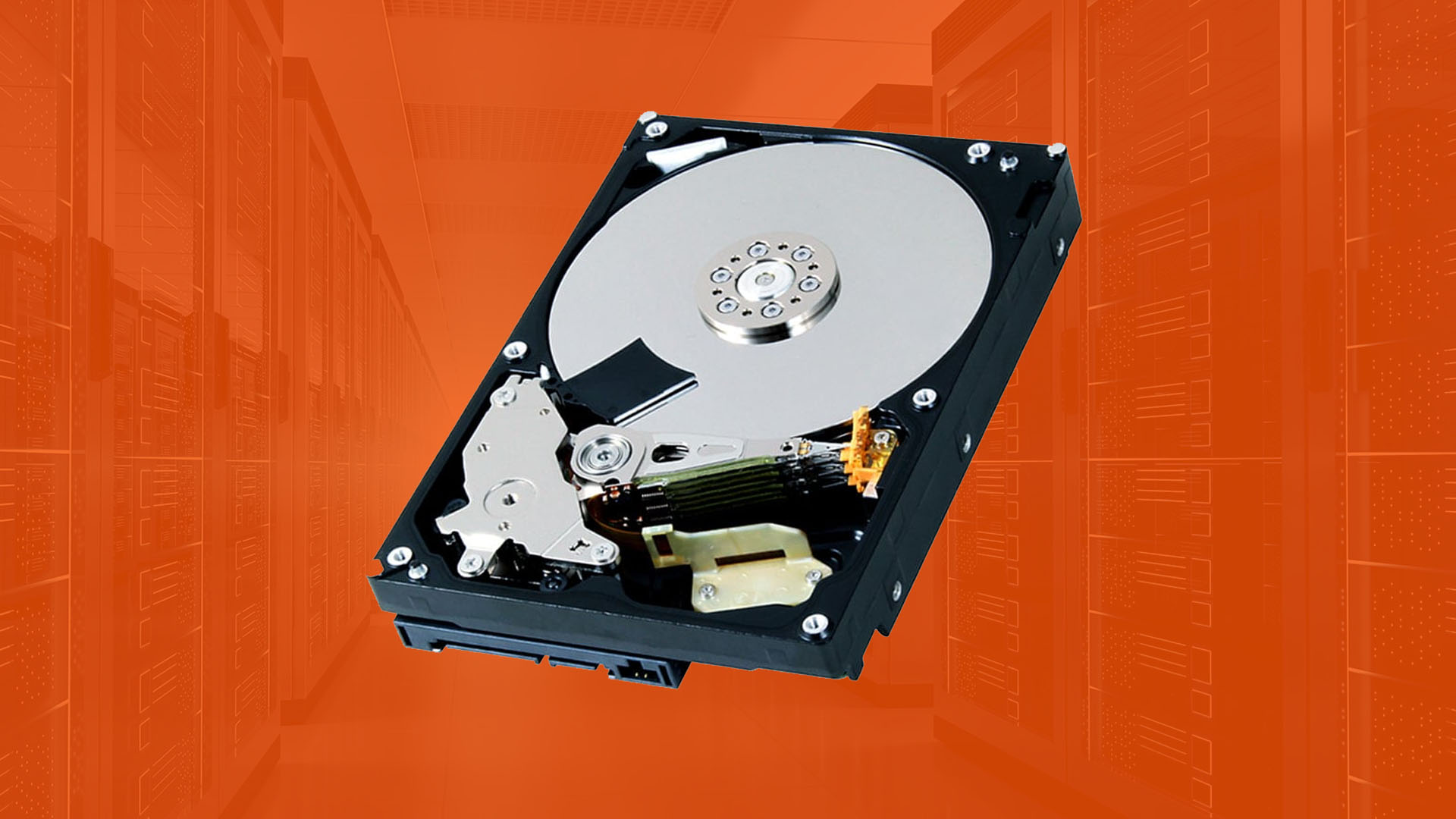
For years, the capacity of hard disk drives (HDDs) seemed to plateau, hitting an invisible ceiling. But Seagate has shattered that barrier with the introduction of its monstrous 32TB hard drive, a technological marvel that employs lasers to manipulate the magnetic properties of the disk platters. This innovation, known as Heat-Assisted Magnetic Recording (HAMR), has been in development for nearly two decades and marks a significant leap forward in storage technology.
This isn’t just about cramming more movies or games onto your computer. This advancement has far-reaching implications for data-intensive fields like scientific research, artificial intelligence, and video surveillance. Imagine storing massive datasets, complex simulations, or years of high-resolution footage all on a single drive. This is the promise of HAMR technology.
The Challenge of Density and the Rise of HAMR
To understand the significance of this breakthrough, we need to delve into the limitations of traditional hard drive technology. HDDs store data on rotating platters coated with a magnetic material. The data is written and read by a tiny head that hovers over the platter, flipping the magnetic orientation of microscopic regions to represent ones and zeros.
Increasing storage capacity traditionally involved squeezing more of these magnetic bits onto the platter. However, as the bits get smaller and closer together, they become susceptible to magnetic interference from their neighbors, leading to data instability and errors. This phenomenon, known as the “superparamagnetic limit,” has been a major roadblock in increasing storage density.
Shopping ad

- Video-optimized CMR drive up to 32TB for NVRs with AI for edge applications.
- ImagePerfect AI firmware delivers zero dropped frames while supporting heavier workloads
- Adapts intelligently with support for up to 64 HD video streams and 32 AI streams.
- Peace-of-mind with SkyHawk Health Management and 3 years of in-house Rescue Data Recovery Services.
- Designed for 550TB/year workloads and 2.5M hours MTBF, backed by 5-year limited warranty.
HAMR technology overcomes this obstacle by using a laser to momentarily heat a tiny spot on the platter during the writing process. This heating allows the magnetic orientation of the bit to be flipped more easily, enabling the use of more stable magnetic materials that can be packed more densely. The laser heats and cools the spot within a nanosecond, ensuring that the surrounding area remains unaffected.
How HAMR Works: A Nanosecond Dance of Light and Magnetism
Imagine a microscopic dance floor where each dancer represents a bit of data. In traditional recording, these dancers are close together, and their movements can easily influence each other. HAMR technology is like introducing a spotlight that momentarily focuses on a single dancer, allowing them to execute a precise move without disturbing the others.
Shopping ad
- MASSIVE 28TB CAPACITY – Store and manage enormous datasets with ease. Ideal for data centers, servers, NAS systems, cloud storage, and large-scale backup solutions.
- ENTERPRISE-CLASS PERFORMANCE – 7,200 RPM spindle speed, SATA III 6Gb/s interface, and large cache deliver fast, consistent throughput for demanding 24/7 workloads
- CMR TECHNOLOGY (CONVENTIONAL MAGNETIC RECORDING) – Designed for predictable performance, reliability, and compatibility in RAID and enterprise storage environments.
- BUILT FOR 24/7 OPERATION – Engineered for continuous use with enterprise-grade durability, making it suitable for mission-critical applications and high-density storage arrays.
- STANDARD 3.5” SATA FORM FACTOR – Seamlessly integrates into most enterprise servers, workstations, and NAS enclosures that support 3.5-inch SATA hard drives.
Here’s a simplified breakdown of the HAMR process:
- Laser Targeting: A tiny laser diode attached to the read/write head focuses a laser beam on a minuscule spot on the disk platter.
- Heating: The laser heats this spot to a precise temperature, making the magnetic material more receptive to change.
- Writing: The read/write head flips the magnetic orientation of the heated spot, encoding a bit of data.
- Cooling: The laser is turned off, and the spot cools down rapidly, stabilizing the magnetic state of the written bit.
This entire process happens within a nanosecond, allowing for rapid data writing without compromising stability.
What’s actually slowing this PC down?
Pick the symptom - the matching free tool is one click away.
Beyond Capacity: The Benefits of HAMR
While the most obvious advantage of HAMR is increased storage capacity, it also offers several other benefits:
Shopping ad

- 26TB ultra-high capacity for large-scale storage
- 7,200 RPM for sustained enterprise workloads
- SATA 6Gb/s interface for wide system compatibility
- Enterprise-class reliability for continuous operation
- High workload rating for data-intensive applications
- Improved Reliability: The use of more thermally stable magnetic materials enhances data integrity and reduces the risk of data loss.
- Lower Power Consumption: HAMR drives are expected to consume less power than traditional HDDs, contributing to energy efficiency.
- Increased Data Transfer Rates: Although current HAMR drives have similar data transfer rates to conventional drives, future iterations are expected to offer significant improvements.
My Experience with High-Capacity Drives
As a technology enthusiast and someone who works with large datasets regularly, I’ve always been fascinated by the evolution of storage technology. I remember the days when a 1GB hard drive was considered massive. Now, with the advent of 32TB HAMR drives, we’re entering a new era of storage possibilities.
I recently had the opportunity to test one of Seagate’s 32TB HAMR drives, and I was blown away by its performance. I was able to transfer massive video files and databases with ease, and the drive remained cool and quiet throughout the process. This technology has the potential to revolutionize how we store and access data, and I’m excited to see its impact on various industries.
Shopping ad
- Store vast amounts of data with a class-leading 24TB capacity, perfect for hyperscale environments, data centers, and big data applications.
- 7200 RPM, SATA 6Gb/s interface, and large 512MB cache, delivering fast, predictable performance for demanding server workloads.
- Designed for 24/7 operation with a high 2.5 million hours MTBF (Mean Time Between Failures) rating, ensuring enterprise-class durability and data dependability.
- Conventional Magnetic Recording (CMR): Employs proven CMR technology for consistent and reliable performance across various workloads.
- Engineered for massive scale-out (MSO), high-density data centers, and cloud storage applications.
The Future of HAMR and Beyond
Seagate’s 32TB HAMR drive is just the beginning. The company plans to further increase storage density in the coming years, with 40TB, 50TB, and even 100TB drives on the horizon. This technology is not just limited to hard drives; it could also find applications in other magnetic storage devices, such as tape drives.
The Tool Desk
Outbyte Driver Updater FREEFix the driver behind crashes, sound loss and screen glitchesFind Drivers →Outbyte PC Repair FREERepair Windows errors before they cause bigger problemsFix Now →However, HAMR is not the only technology vying for dominance in the storage landscape. Other promising technologies, such as Microwave-Assisted Magnetic Recording (MAMR) and Heated-Dot Magnetic Recording (HDMR), are also being developed. The future of storage is likely to be a combination of these different approaches, each offering unique advantages and catering to specific needs.
Shopping ad

- (1) 1GB = 1 billion bytes and 1TB = 1 trillion bytes. Actual user capacity may be less depending on operating environment.
- Compatibility: Unlike desktop drives, WD Red hard drives are specifically designed and tested for NAS and include NASware technology which fine tunes drive parameters to match NAS system workloads for optimum performance.
- Reliability: Desktop drives aren’t typically designed for the demands of an always-on NAS environment. WD Red hard drives are designed to perform under tough conditions encountered in high-intensity 24x7 multi-user NAS environments.
- RAID Ready: WD Red hard drives are engineered with RAID error recovery control to help reduce failures within multi-bay NAS systems, unlike most desktop drives that are configured for generic use.
- Noise and Vibration Protection: Designed to operate solo, desktop drives typically offer little or no protection from the noise and vibration present in a multi-drive system. WD Red hard drives include Rotation Vibration (RV) sensors that anticipate and proactively counteract disturbances caused by increased vibration often found in multi-bay NAS systems.
The arrival of 32TB HAMR hard drives marks a pivotal moment in the evolution of storage technology. By harnessing the power of lasers, Seagate has unlocked new levels of storage density, paving the way for a future where data limitations are a thing of the past. As we generate and consume ever-increasing amounts of data, innovations like HAMR will be crucial in ensuring that we can store, access, and utilize this information effectively.
Quick Recap
Product prices and availability are accurate as of the date/time indicated and are subject to change. Any price and availability information displayed on Amazon at the time of purchase will apply.